Protecting Your Brand: A Strategic Guide to Trademark Selection and Clearance

The biblical principle that “a good name is more desirable than great riches” (Proverbs 22:1) resonates profoundly in today’s marketplace, where your brand identity represents the cornerstone of your business’s goodwill and reputation.

Protecting Your Brand: A Strategic Guide to Trademark Selection and Clearance

by Anthony Biller, Esq.

The biblical principle that “a good name is more desirable than great riches” (Proverbs 22:1) resonates profoundly in today’s marketplace, where your brand identity represents the cornerstone of your business’s goodwill and reputation. The art of branding starts at selection. As a North Carolina Board Certified Specialist in Trademark Law with nearly three decades of trademark management and litigation experience, I am certain that an ounce of trademark selection prevention at the outsets, often prevents pounds of trademark misery in the long run. After helping clients with thousands of trademark needs across the country and worldwide, I’ve witnessed how proper trademark strategy can make or break a brand’s success, and at the very least, save considerable pain and expense.

The Foundation: Understanding Trademark Strength and Taxonomy

Selecting a protectable brand name begins with understanding the inherent strength spectrum of trademarks. Not all marks receive equal protection under the law, and choosing wisely at the outset can save substantial resources and legal complications. Proper selection also helps consumers remember your brand and holds the goodwill you work so hard to establish.

The Hierarchy of Trademark Strength
Fanciful Marks (Strongest Protection)

These are invented words created solely to function as trademarks, bearing no prior meaning in any language. Examples include Lipitor, QDOBA, Rolex and Exxon. Google is likely fanciful because the closest linguistic term that preceded it was “googolplex,” a different word that the new, fanciful term invokes. Because these terms exist only as brand identifiers, they receive the broadest scope of protection and are immediately registrable. While they require significant marketing investment to build consumer recognition, their legal strength is unparalleled. They are unique.

Arbitrary Marks (Strong Protection)

These employ common English words applied in contexts unrelated to their ordinary meaning. The paradigm example is Apple for computers and electronics—completely disconnected from the fruit’s semantic field. Other examples include Camel for cigarettes and Amazon for an e-commerce and cloud platform. Arbitrary marks combine memorable linguistic familiarity with strong legal protection, making them excellent strategic choices.

Suggestive Marks (Strong, Immediately Protectable)

Suggestive marks hint at product attributes without explicitly describing them, requiring consumers to exercise imagination or “sequential thought” to discern the connection. Coppertone suggests suntan results, London Fog with jackets suggests something suitable for wet weather, Mustang implies speed and strength for an automobile, and Microsoft hints at software for microcomputers. These marks strike an optimal balance between marketing appeal and legal protectability, receiving immediate trademark protection without requiring proof of secondary meaning.

Descriptive Marks (Protectable Only with Secondary Meaning)

Most entrepreneurs are practical and effective by nature. Why would they spend $1 for one widget when they could buy a widget and one more useful item for the same price? That practical approach is useful in many business endeavors, but not in trademark selections. Quite often entrepreneurs want a mark that “does something,” that does not just identify but also tells the consumer something practical about the corresponding goods or services. These descriptive terms directly convey information about product qualities, ingredients, functions, or geographic origin. American Airlines, Sharp for televisions, Cartoon Network for a TV network featuring cartoons and Windows for “windowing” computer software all immediately communicate characteristics of the goods or services. The problem, however, is that marks are supposed to be a source identifier, not a descriptor. While not inherently protectable, descriptive marks can acquire trademark rights through extensive, exclusive use that establishes “secondary meaning”—consumer recognition that the term indicates source rather than merely describing product features. However, this path is fraught with risk, requiring substantial investment and offering narrower protection. Because many business owners have a bias towards descriptive marks, businesses in the same and related areas of commerce naturally gravitate towards the same and confusingly similar names for their competing goods and services. These leads to crowded brand fields, which in turn lead to higher rates of trademark conflict and lower rates of consumer recognition. Dilute brand terms are less likely to be remembered as being associated with a particular source.

Generic Terms (Never Protectable)

Generic words are the common name for a product category, the words as they are defined in the dictionary, e.g. “apple” for the fruit. These remain forever in the public domain. No amount of marketing expenditure or consumer recognition can transform “Bagel Shop” for a bagel restaurant or “Ale House” for a beer-serving establishment into a trademark. Attempting to build a brand around generic terminology fundamentally undermines exclusivity and invites competitive use. As a matter of law, courts will not grant trademark rights in generic words or phrases, regardless of consumer confusion.

Strategic Implications for Brand Selection

Your trademark selection strategy should prioritize marks highest on the distinctiveness spectrum. Fanciful and arbitrary marks provide the broadest enforceable rights and simplest registration processes. Suggestive marks offer marketing advantages while maintaining strong legal protection. Descriptive marks should be avoided unless business circumstances specifically warrant the investment required to establish secondary meaning.
(The internet, domain names and search engine optimization provide a strong e-commerce counter current against trademark selection criteria. The law will never give a business trademark rights in the word “car” used to market and sell automobiles. The domain CARS.COM and other generic.com domains are highly valuable commodities for e-commerce.)

The trademark selection analysis is always context-dependent—a term’s classification depends entirely on its relationship to the specific goods or services. “Apple” remains generic for fruit but becomes arbitrary for technology products. This contextual analysis requires sophisticated legal judgment to navigate properly.

The Clearance Process: From USPTO to Global Marketplace

Before adopting any mark, comprehensive clearance is non-negotiable. There are multi-tiered approaches for evaluating the risk of moving into a brand space.

Tier 1: USPTO Registrability Search

This initial screening examines the United States Patent and Trademark Office (USPTO) database for identical or confusingly similar registered marks and pending applications. This search reveals obvious conflicts and suggests whether you may be able to register the mark.
The USPTO examines marks under the “likelihood of confusion” standard, considering factors including:

• Similarity of the marks in appearance, sound, and meaning
• Relatedness of the goods or services
• Strength of the senior mark
• Evidence of actual confusion
• Marketing channels and trade channels
• Sophistication of consumers

Many make a critical error of stopping here, exposing their clients to substantial risk. A USPTO clearance evaluates registered marks, which are typically the more sophisticated and serious trademark owners. Most trademarks, however, are not registered, and unregistered marks are protectable. Sometimes it makes sense to limit a clearance to the USPTO. However, for capital intensive brand launches, particularly for house or “base” brands, it is often prudent to do a marketplace clearance.

Tier 2: Comprehensive U.S. Marketplace Clearance

The USPTO database contains only registered marks and pending applications—a fraction of enforceable trademark rights. Under U.S. law, unregistered common law rights arise from actual use in commerce and can block your registration and use. These rights exist in geographic areas where the prior user has established market presence, even without federal registration.
Comprehensive clearance therefore requires searching:

• State trademark registries
• Business directories and trade publications
• Internet and social media usage
• Domain name registrations
• Industry-specific databases

This broader investigation identifies potential conflicts that could derail your brand launch or expansion. I’ve observed situations where clients’ expansion plans were thwarted by third party regional common law rights that a USPTO-only search would have missed entirely.

Tier 3: Worldwide Registrability Searches

For organizations with international aspirations within the next five years —and in today’s economy, that includes an increasing number of businesses—multi-country clearance is essential. Trademark rights are territorial; a U.S. registration provides no protection in Canada, Mexico, Europe, or Asia.
International clearance requires searching:

• National trademark databases in target jurisdictions
• Regional systems (European Union Intellectual Property Office, African Intellectual Property Organization)
• WIPO Global Brand Database for international registrations
• Local business registries and commercial directories
• Linguistic and cultural assessments to ensure the mark doesn’t have negative connotations in foreign languages

The Madrid Protocol streamlines international registration for member countries, but it doesn’t substitute for proper clearance. Each jurisdiction maintains independent examination standards and prior rights that can block your application.

Strategic Registration: Securing Rights Across All Jurisdictions

Once clearance confirms a mark’s availability, strategic registration planning becomes paramount. A common but costly mistake is registering only in current markets of operation.

The Five-Year Forward-Looking Rule

I advise clients to register trademarks in all jurisdictions where they reasonably anticipate using the mark within the next five years. This proactive approach recognizes that:

1. Trademark registration timelines often extend 12-18 months (or longer if registry conflicts or prior pending applications are cited)
2. Business expansion opportunities frequently arise unexpectedly
3. E-commerce renders geographic boundaries increasingly porous
4. Preemptive registration blocks competitive encroachment and cybersquatting
5. International treaties like the Madrid Protocol facilitate cost-effective multi-jurisdictional filings

Jurisdiction-by-Jurisdiction Strategy

Each country maintains unique trademark laws, examination practices, and enforcement mechanisms. Key considerations include:

• First-to-file vs. first-to-use systems (most countries are first-to-file; the US is the purest first-to-use)
• Specificity of goods/services descriptions required
• Language requirements for applications and evidence
• Use requirements and grace periods
• Enforcement mechanisms and customs recordation options

For ministries and content based organizations I represent, international protection is particularly critical. The global reach of broadcasting, publishing, and digital content demands comprehensive trademark coverage to prevent unauthorized use and maintain content integrity across jurisdictions.

Conclusion: Expertise That Protects Your Brand’s Future

Trademark law’s complexity demands diligence and expertise. The trademark taxonomy, comprehensive clearance methodology, and forward-looking registration strategy represent the foundation of sound brand protection. Yet each client’s situation requires customized analysis and strategic planning tailored to specific industry dynamics, geographic considerations, and business objectives.

Whether you’re launching a new business or ministry, expanding a commercial brand, or defending existing trademark rights, the investment in proper trademark strategy at the outset yields exponential returns in risk mitigation and brand value preservation. The favor of a good name—properly protected—remains more valuable than gold, silver, or costly perfume. Let us help you protect yours.
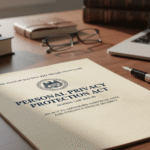




North Carolina’s New Personal Privacy Protection Act: What Nonprofits Need to Know

Envisage-Law-Personal-Privacy-Protection-Act-Session-Law

By: Joelle Harvill
Licensed Attorney in Michigan, North Carolina, and Tennessee

Starting December 1, 2025, a new North Carolina law gives nonprofits stronger tools to protect their supporters’ privacy. Known as the Personal Privacy Protection Act (Session Law 2025-79), this law is now part of Chapter 55A, the state’s Nonprofit Corporation Act.

Why This Law Matters

This legislation was inspired by a landmark 2021 U.S. Supreme Court case, Americans for Prosperity Foundation v. Bonta, which found that requiring nonprofits to hand over donor lists violated the First Amendment right to free association. The Court recognized that forcing disclosure of supporter information could expose donors to unwanted attention or discourage charitable giving altogether.

North Carolina’s new law builds on that principle, ensuring individuals can support causes they care about—whether arts, education, health, or community services—without fear that their personal information will be released by government agencies.

What the Law Does

The Personal Privacy Protection Act prohibits state and local government agencies
from:

  1. Demanding donor lists from nonprofits or individuals
  2. Publicly releasing names, addresses, or other information about donors,
    members, or volunteers
  3. Requiring donor disclosure as a condition of getting grants or contracts

In short, your donor information is now legally protected and cannot be treated as a public

How This Helps Your Nonprofit

Stronger donor trust: Supporters can give with confidence knowing their information stays private.
Reduced compliance burden: You can refuse improper requests for donor data without legal risk.
Legal protection: The law includes penalties for violations—up to $2,500 per incident plus legal fees—and even criminal charges for intentional breaches.

When Disclosure Is Allowed

  • The law includes narrow exceptions for specific legal situations: Court orders requiring donor information with strict confidentiality protections
  • Campaign finance reports required by state or federal election law
  • Voluntary public releases when you or the donor choose to share information
  • Basic corporate filings listing officers and directors (not donors)
  • Government audits by the Attorney General or Secretary of State under specific legal authority, where the information must remain confidential

What Disclosures Are Prohibited

  • Releasing or publishing donor names or addresses without consent.
  • Requiring disclosure of donor lists for licensing, contracting, or compliance purposes.
  • Providing donor data to public agencies or third parties unless legally obligated.

IRS Donor Disclosure Requirements (Federal Law)

Under IRS rules, most tax-exempt nonprofits must submit donor information to the IRS only—not to the public.

  • 501(c)(3) and 527 organizations must report names, addresses, and amounts of contributions over $5,000 on Form 990, Schedule B.
  • This data is not public except for private foundations and 527 political organizations.
  • 501(c)(4) and (6) entities no longer need to report donor names to the IRS but must keep complete internal records for audit purposes.

No federal rule requires you to publicly disclose donor names.

Action Steps for Your Organization

1. Get donor consent for public recognition

Before listing supporters in programs, or on your website, ask for written permission. Offer an “anonymous” option for those who prefer privacy. Never include addresses,
email contacts, or donation amounts.

2. Adopt a clear Donor Privacy Policy that conveys

Create or revise your policy to explain that:

  • Donor information is confidential and will not be shared, sold, or traded without consent.
  • Public recognition appears only with explicit donor approval.
  • Procedures exist for donors to opt out or change preferences.

Posting this policy on your website and donation forms reinforces trust and demonstrates compliance.

3. Know how to respond to requests

If a government agency asks for donor information, verify the request is legally required before sharing anything. When in doubt, consult legal counsel.

In short: North Carolina’s new donor privacy law strengthens the relationship between nonprofits and their supporters. By updating your policies, training your team, and practicing transparent consent-based recognition, you’ll not only comply with the law—you’ll build deeper trust with the people who make your mission possible.

Law Citation: G.S. 55A-18 (North Carolina Nonprofit Corporation Act)
Download Session Law: 2025-79


Open Source, AI, and the Law: A Week of Insight and Innovation

Envisage Law Open Source, AI, and the Law: A Week of Insight and Innovation

By: Joelle Harvill
Licensed Attorney in Michigan, North Carolina, and Tennessee

Week at the Intersection of Technology and Law

On October 13, 2025, I kicked off a week immersed in the dynamic intersection of technology and law. My journey began at All Things Open 2025—the largest open-source, tech, and web conference on the East Coast—hosted in Raleigh, North Carolina, one of the nation’s fastest-growing technology hubs. With over 5,000 technologists, developers, and innovators in attendance, the conference celebrates open source, collaborative innovation, and the ethical deployment of emerging technologies. For an attorney like me, it offered direct access to the technical minds and thought leaders shaping today’s most pressing legal challenges in intellectual property, data privacy, cybersecurity, and artificial intelligence.

From Conference to Campus: The Legal Conversation Continues

The week came full circle at North Carolina Central University School of Law’s 2025 Technology and Law Summit, where experts explored how artificial intelligence, data privacy, cybersecurity, and intellectual property law are reshaping both business strategy and legal practice. A clear theme emerged across both events: software licensing lies at the core of how technology generates commercial value—or risk.
The Case to Watch: Software Freedom Conservancy v. Vizio

On January 12, 2026, a closely watched trial kicks off in California: Software Freedom Conservancy, Inc. v. Vizio, Inc. The outcome could redefine how companies manage open-source license obligations and influence how courts interpret third-party beneficiary rights in technology contracts.

In this case, Software Freedom Conservancy (SFC) claims Vizio breached its obligations under the GPLv2 and LGPLv2.1 open-source licenses by failing to provide a copy of the source code for various open-source software embedded in its SmartCast TVs. This software powers key features with Amazon Alexa, Google Assistant, and Apple’s Siri. The SFC purchased Vizio TVs and demanded the corresponding source code—an essential feature of these “copyleft” licenses that ensure users retain the right to study, modify, and share the software they receive.

What makes this case novel is SFC’s legal strategy. Instead of advancing a federal copyright claim, SFC is suing under state contract law as a third-party beneficiary—arguing that end users like itself were specifically intended to benefit from the contractual promise to provide source code. Vizio, by contrast, argues that copyright law preempts such contract claims. So far, both federal and state courts have rejected that argument, setting the stage for a precedent-setting jury trial.

The central question is simple but consequential: were users like SFC intended third-party beneficiaries of the open-source license? If the jury agrees, companies distributing open-source software may face broader—and more enforceable—contractual obligations than previously imagined.

Lessons for Companies

The Vizio case highlights a critical compliance and risk issue: open-source software licenses are not “free” in the legal sense. They come with conditions that, if ignored, can lead to serious business consequences. Every agreement to use, modify, or distribute open-source code is a legal promise—to pass along rights, share source code, and respect the ecosystem that enables open innovation.
For companies integrating open-source software into proprietary products—or hiring developers who do—understanding license terms is essential. Missteps can jeopardize trade secrets, delay product launches, or trigger litigation.
At our firm, we help companies bridge the gap between technical innovation and legal compliance. Whether it’s software licensing, technology transactions, data privacy and cybersecurity, or AI governance, our goal is to help clients innovate with confidence—without losing sight of legal and ethical boundaries.

Let’s talk. If your business touches software, now is the time to ensure your licensing strategy is as smart as your technology.


North Carolina Supreme Court Greenlights Claims Against Insurance Agent

North Carolina Supreme Court Greenlights Claims Against Insurance Agent

By: James Lawrence, Partner


Last week, in an opinion with implications for small businesses and insurance brokers, the Supreme Court of North Carolina ruled that a homeowner who “trusted” in an insurance agent’s “assurance that it would accurately fill out the application” stated a claim for negligence and punitive damages.

Jones v. J. Kim Hatcher Insurance Agencies, Inc. arose out of a relationship between a homeowner and an insurance agent that dates back to 2014. Jones alleged the following in his complaint. In August 2016, the insurance agent presented Jones with a single-page application form and instructed him to sign. The company “did not ask Jones any questions regarding his property or the application.” The following year, the agent presented Jones with another application with pre-printed text: “I have read the above application and any attachments and declare that the information is true and complete.” But the company told Jones he did not need to fill in the application only that he needed to sign “and pay the first payment.”

Fast forward to 2018. Hurricane Florence “substantially damaged Jones’s home and property.” The insurer refused to pay Jones because his application—the one the agent told Jones he did not need to fill in—“did not mention his pond or accurately describe his property acreage.”

Jones sued, among other parties, the agent and the insurer. The trial court largely dismissed the case at the Rule 12 stage. The North Carolina Court of Appeals reversed on the negligence claim, declining to find Jones was contributorily negligent, a bar to liability in North Carolina. The Court of Appeals affirmed dismissal of the punitive damages claim.

The North Carolina Supreme Court affirmed reinstatement of the negligence claim and reversed the Court of Appeals on punitive damages. Regarding negligence, while the North Carolina Supreme Court affirmed that “everyone who can read a document has a duty to do so when signing it,” but pointed to a 1921 case that such a duty “is subject to the qualification that nothing has been said or done to mislead him or to put a man of reasonable business prudence off his guard in the matter.” In the court’s view, Jones’s allegations regarding the insurance agent’s “specific assurances and the course of prior dealings between them” were sufficient for purposes of Jones being “off his guard.” The court likewise found Jones’s pleading of punitive damages sufficient in view of his allegation that the insurance agent “while acting as his agent to procure him insurance coverage, knowingly mispresented basic information about Jones’s property.”

The Jones opinion gives small business owners who entrust agents to fill out applications at least some comfort, at least where they have carried on a long-term relationship with an agent. The decision might breathe new life into claims that were otherwise denied by insurers. Insurance agents, by contrast, are now on notice of the potential pitfalls of taking on such duties. The fine print in application documents might not be enough to stave off costly litigation.


Neuralink Files ‘Telepathy’ and ‘Telekinesis’ Trademarks

Neuralink Files 'Telepathy' and 'Telekinesis' Trademarks

By Anthony J. Biller, Partner – Curated by Perplexity.ai dailyed

Elon Musk’s brain implant company Neuralink has filed trademark applications for futuristic terms like “Telepathy” and “Telekinesis” with the United States Patent and Trademark Office, signaling ambitious plans for brain-computer interface technology that could revolutionize human-machine interaction and communication.

Neuralink’s Trademark Filings

On March 3, 2025, Neuralink filed trademark applications for several groundbreaking terms, including “Telepathy” (serial number 99063908) and “Telekinesis”123. These filings were made on an “intent-to-use” basis, indicating the company’s active development of products under these names2. The “Telepathy” trademark is described as “an implantable brain-to-computer interface for facilitating communication and control of software and hardware”1. Additionally, Neuralink applied for other futuristic trademarks such as “Blindsight,” suggesting technology aimed at restoring vision to those with sight loss45. These applications represent a significant step towards commercializing Neuralink’s brain-computer interface technology, potentially expanding beyond medical applications into consumer products64.

Telepathy: Brain-Computer Interface

The “Telepathy” trademark application describes a revolutionary implantable brain-computer interface designed to facilitate communication and control of software and hardware through thought alone12. This technology aligns with Elon Musk’s vision for Neuralink’s first product, which aims to enable individuals with paralysis to control computers or phones using only their minds3. Currently, Neuralink’s technology involves a brain implant that collects neural signals and software that translates these signals into cursor movements on a computer screen4. The company’s ambitions extend beyond medical applications, potentially enabling telepathic communication not just with electronic devices but possibly between humans with Neuralink implants25.

Telekinesis: Mind-Controlled Objects

Neuralink’s trademark application for “Telekinesis” hints at ambitious plans to develop technology that could allow users to control physical objects using only their thoughts. This concept, while seemingly straight out of science fiction, aligns with the company’s broader vision of expanding human capabilities through brain-computer interfaces. The potential applications of such technology are vast, ranging from assistive devices for individuals with mobility impairments to revolutionary advancements in industrial automation and robotics12.

While specific details about Neuralink’s “Telekinesis” technology remain undisclosed, it likely builds upon the company’s existing brain-computer interface system. This system, which includes the “Link” implant and the “N1” electrode array, could potentially be adapted to interpret neural signals associated with intended movements and translate them into commands for external devices32. As Neuralink continues to refine its technology, the prospect of mind-controlled objects moves closer to reality, promising to reshape how humans interact with their physical environment.

Experimental Trials and Vision

As of February 2025, three individuals with paralysis have received experimental Neuralink implants as part of an early feasibility study, with the first recipient, Noland Arbaugh, undergoing brain surgery in January 20241. These trials mark a significant milestone in Neuralink’s journey towards realizing its ambitious vision. The company’s broader aspirations extend beyond assisting those with paralysis, as evidenced by their trademark filing for “Blindsight,” which suggests technology aimed at restoring vision to those with sight loss23. This multifaceted approach underscores Neuralink’s commitment to addressing various neurological challenges and expanding the potential applications of their brain-computer interface technology.


Neuralink’s Trademark Filings Citations:

  1. https://cryptifynow.com/elon-musks-neuralink-files-to-trademark-telepathy/
  2. https://www.gerbenlaw.com/blog/neuralink-files-trademark-for-telepathy-a-glimpse-into-a-mind-controlled-future/
  3. https://www.ipqwery.com/ipowner/en/owner/ip/944975-neuralink-corp.html?rgk=IPType&rvk=Trademark&rgk=Jurisdiction&rvk=USPTO
  4. https://opentools.ai/news/neuralinks-leap-towards-mind-control-what-you-need-to-know-about-telepathy-and-more
  5. https://wltreport.com/2025/03/07/elon-musks-neuralink-files-trademarks-telepathy-telekinesis/
  6. https://www.trademarkia.com/news/business/neuralink-trademark-mind-controlled-tech-begins

Telepathy: Brain-Computer Interface Citations:

  1. https://cryptifynow.com/elon-musks-neuralink-files-to-trademark-telepathy/
  2. https://www.gerbenlaw.com/blog/neuralink-files-trademark-for-telepathy-a-glimpse-into-a-mind-controlled-future/
  3. https://aitopics.org/doc/news:2DF00CD8
  4. https://neuralink.com/blog/a-year-of-telepathy/
  5. https://opentools.ai/news/neuralinks-leap-towards-mind-control-what-you-need-to-know-about-telepathy-and-more

Telekinesis: Mind-Controlled Objects Citations:

  1. https://www.gerbenlaw.com/blog/neuralink-files-trademark-for-telepathy-a-glimpse-into-a-mind-controlled-future/
  2. https://opentools.ai/news/neuralinks-leap-towards-mind-control-what-you-need-to-know-about-telepathy-and-more
  3. https://aitopics.org/doc/news:2DF00CD8

Experimental Trials and Vision Citations:

  1. https://neuralink.com/blog/a-year-of-telepathy/
  2. https://www.trademarkia.com/news/business/neuralink-trademark-mind-controlled-tech-begins
  3. https://opentools.ai/news/neuralinks-leap-towards-mind-control-what-you-need-to-know-about-telepathy-and-more


Envisage Law Expands Into Vibrant Western North Carolina

Exciting news for Western North Carolina! We're thrilled to announce that Adam Banks, a partner at Envisage Law, has relocated to Asheville. This move marks Envisage Law's expansion into the vibrant WNC region.

Exciting news for Western North Carolina! We’re thrilled to announce that Adam Banks, a partner at Envisage Law, has relocated to Asheville. This move marks Envisage Law’s expansion into the vibrant WNC region.

Adam brings his expertise in civil litigation, construction law, non-profit disputes, and fiduciary litigation to the area. For the past five years, his peers have selected him as a North Carolina Super Lawyer, and Adam’s track record of success speaks for itself.

With Adam’s relocation, Envisage Law is poised to serve clients throughout Western North Carolina with the same dedication and professionalism that have become our hallmark[2]. Envisage will meet clients at our office at 1600 Biltmore Avenue by appointment. Our firm’s comprehensive legal services, including business law, litigation, intellectual property, and wealth management, are now available to the thriving business community in WNC.

We look forward to becoming an integral part of the legal landscape in Asheville and WNC. If you’re in the area and need top-notch legal representation, don’t hesitate to contact Adam and the Envisage Law team!

#LegalServices #WesternNorthCarolina #EnvisageLaw #BusinessLaw